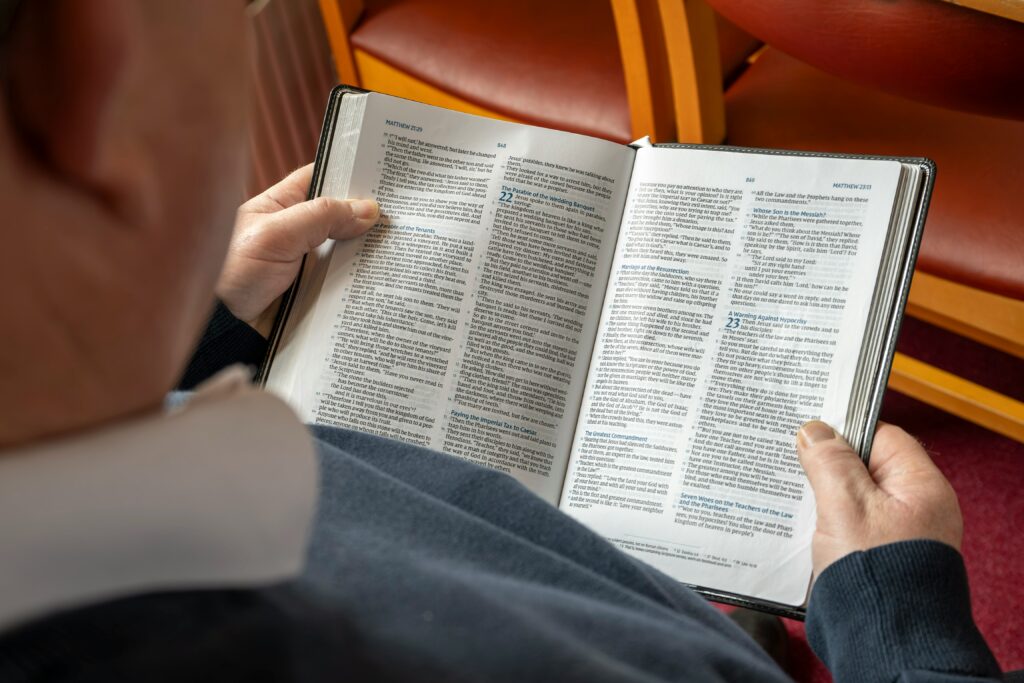
A Biblical Perspective on Spirituality and Tradition
Introduction: A Question Many Believers Quietly Ask
Is it better to be religious or spiritual? For many people raised within church culture, this question does not arise from rebellion — it arises from tension. On one side stands structured religion: doctrine, leadership, tradition, and communal worship. On the other stands spirituality: inner conviction, personal transformation, and direct relationship with God.
Modern culture frequently frames being Religious or Spiritual as opposites. Being Religious is portrayed as rigid and institutional; being Spiritual as personal and authentic. Yet the biblical text does not support this simplistic division. To answer this question faithfully, we must distinguish between biblical spirituality and religious tradition — not to dismiss either, but to clarify how each developed, how each functions, and how, at their best, they were always meant to work together
What Does the Bible Mean by Spirituality?
In Scripture, spirituality is not vague mysticism. It is deeply practical and inward. The biblical narrative consistently emphasizes the renewal of the mind, the transformation of the heart, alignment with God’s will, and inner conviction guided by conscience.
When Jesus speaks of the kingdom of God, He describes it not as a geographical or political territory but as something present within and among people (Luke 17:21). The emphasis is not institutional control but internal transformation.
The Apostle Paul describes spiritual maturity in similar terms — as renewal, growth, and the fruit produced in the life of a believer (Galatians 5:22–23). Spiritual life, in Paul’s framework, is measured by character, not by external compliance alone.
Biblical spirituality, therefore, begins inwardly. It centers on personal accountability before God, alignment of the inner person rather than public performance, and a conscience shaped by divine principle.
What Is Religion in the Biblical Context?
Being Religious, in its most basic sense, refers to structured expressions of faith: organized worship, community gatherings, leadership roles, doctrinal continuity, and moral teaching.
The Bible itself includes and affirms religious structure. There were priests, elders, communal gatherings, and established patterns of teaching. Structure was not condemned — it was necessary for preserving unity and transmitting doctrine across generations.
However, the biblical text also contains clear warnings. Jesus frequently challenged religious leaders — not because religious structure existed, but because external observance had begun to overshadow inward transformation. The concern was never organization itself, but the moment when outward compliance replaced inner sincerity.
Scripture therefore presents religion as functional and potentially beneficial — but vulnerable to distortion when form replaces substance.
Where Does the Tension Develop? Tradition and Institutional Culture
Over time, every religious movement develops tradition, and tradition serves important purposes: it preserves interpretation, maintains continuity, and protects core beliefs from fragmentation.
Yet tradition can also accumulate layers. Cultural habits merge with theological principles. Social expectations intertwine with spiritual teachings. Leadership structures become more defined and, in some cases, more authoritative than the texts they were meant to serve.
The original spiritual emphasis may remain present, but it can be quietly overshadowed by institutional culture. Spiritual humility may gradually become enforced conformity. Moral guidance may shift into behavioral surveillance. Respect for leadership may harden into unquestioned compliance.
The issue is not faith itself. The issue is how spiritual language can be used — consciously or not — to reinforce social stability in ways that reduce personal reflection. This is where the modern ‘religious vs. spiritual’ tension typically begins.
The Psychology of Religious or Spiritual Conformity
Human communities naturally regulate behavior. This is not inherently negative — every society requires shared norms. However, when moral expectations are framed as divinely absolute in every context, individuals may internalize fear-based restraint rather than reflective conviction.
In some environments, questioning is equated with doubt, doubt with weakness, independent thought with pride, and risk-taking with rebellion. Over time, believers may regulate themselves not primarily through Scripture but through community expectation.
This is a meaningful shift. Instead of asking, ‘What does the text actually teach?’ the guiding question becomes, ‘What is culturally acceptable within my religious circle?’ The difference between those two questions shapes the entire character of a person’s spiritual life.
Does Modern Spirituality Have Biblical Parallels?
Modern spirituality often emphasizes personal awareness, inner growth, authenticity, and direct experience. Interestingly, none of these themes is foreign to Scripture.
Biblical teaching repeatedly returns to the inner condition: the heart behind action, the motive behind obedience, the transformation of the inner person. The vocabulary may differ from contemporary spiritual language, but the principle of inward renewal is deeply biblical.
The divergence occurs at two points: when modern spirituality detaches entirely from scriptural grounding, or when institutional religion detaches from inner transformation. The conflict, then, is not between the Bible and spirituality — it is between inward spiritual development and the cultural habits of religious institutions.
The Psychology of Being Religious or Spiritual — Conformity vs Conviction
It would be inaccurate — and unfair — to conclude that religion is inherently restrictive. Without structure, doctrine fragments. Without community, interpretation becomes unstable. Without leadership, accountability disappears. Institutional continuity preserves theological clarity across generations, and community offers correction that solitary spirituality cannot.
However, structure must continually return to its foundation. When tradition becomes self-protective rather than spiritually formative, tension increases. When leadership emphasizes loyalty over understanding, the balance shifts in ways the New Testament never intended.
The New Testament consistently directs attention back to inner transformation as the true measure of spiritual maturity. Religion, in the biblical sense, was never designed to replace spirituality. It was designed to support it.
When Obedience and Understanding Diverge
Obedience is a genuine biblical principle. Scripture calls for moral discipline and faithfulness. But biblical obedience is always rooted in understanding and relationship — not in fear alone (Romans 12:1–2 calls for ‘reasonable service,’ a worship that engages the mind).
When obedience becomes detached from personal conviction and grounded instead in social pressure, the Religious or Spiritual life may remain externally compliant while becoming internally disengaged. This explains the dissonance many believers experience: they are religiously active but spiritually uncertain.
That tension does not necessarily indicate loss of faith. It may indicate a need to distinguish between scriptural principle and cultural enforcement — two things that are not always the same.
So, Is It Better to Be Religious or Spiritual?
The biblical text does not present these as mutually exclusive categories. It presents a clear hierarchy: inner transformation is foundational; external structure is supportive. When structure serves spiritual growth, harmony exists. When structure replaces spiritual growth, imbalance develops.
The more precise question, therefore, is not whether it is better to be religious or spiritual. It is whether one’s religious expression is rooted in genuine spiritual transformation. That alignment — or misalignment — determines the health of both.
Conclusion: Clarifying the Distinction
The modern debate between religion and spirituality often oversimplifies a more nuanced reality. Biblical spirituality emphasizes inner renewal, conscience, humility, and direct moral accountability before God. Religious tradition preserves and organizes these teachings within community life. Both are necessary. Both are biblical.
The challenge arises when cultural layers accumulate and spiritual language is used primarily to regulate rather than to transform. Recognizing that distinction does not require abandoning faith or rejecting church structure. It requires careful, honest reflection: identifying where biblical teaching ends and where cultural tradition begins.
Religion and spirituality, in the biblical sense, were never designed to compete. They were designed to align — and where that alignment is pursued with both intellectual honesty and genuine faith, the tension many believers quietly carry begins to resolve.