Jerusalem’s Sacred Heart That Stays With You Forever
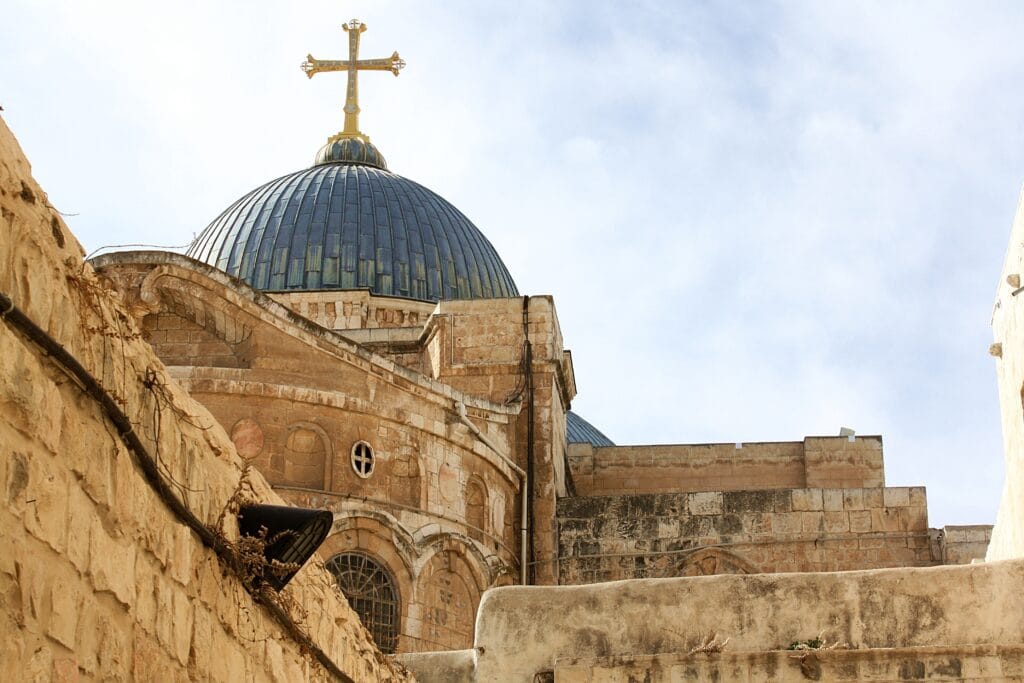
Some places don’t just exist — they stay with you. They slip quietly into your bones, reshaping how you see the world long after the plane has landed back home. In the bustling heart of Jerusalem’s Old City, the Church of the Holy Sepulchre is exactly that kind of place. It is not merely a historic landmark or a tourist checklist item. It is a living space shaped by centuries of prayer, grief, pain, hope, and devotion. Whether you arrive as a devout pilgrim, a curious traveler, or someone quietly seeking something deeper, this church invites you to experience a spiritual presence that feels almost tangible — a quiet force that slows your racing thoughts and stirs the soul.
Entering a Sacred World
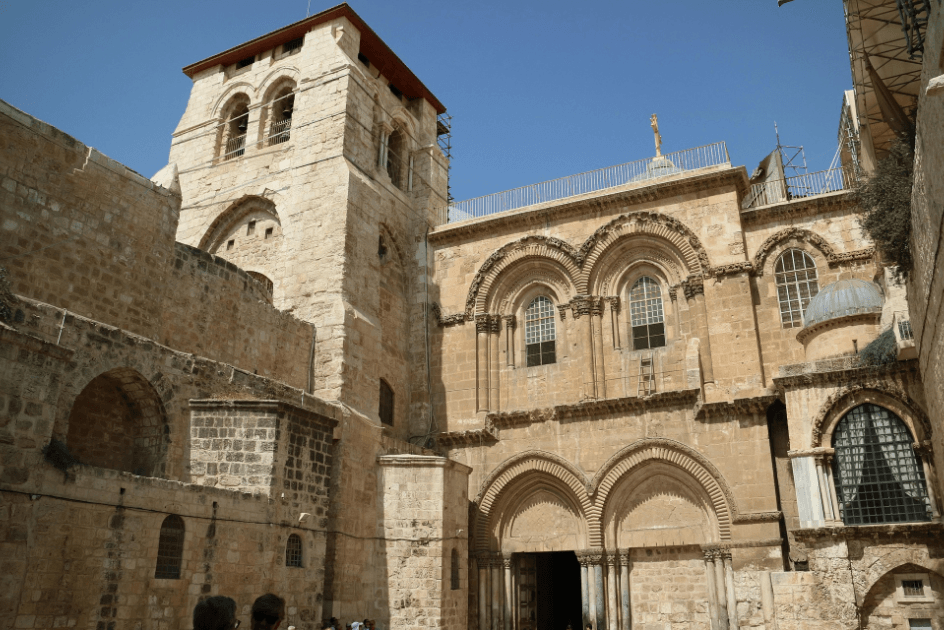
I took first stepped through its massive wooden doors on a crisp spring morning, the kind where the Jerusalem sun already warms the ancient stones of the Christian Quarter. I had seen countless photos online: dim interiors, flickering oil lamps, crowds moving in hushed reverence. But no image could prepare me for the emotional weight that greeted me.
The air itself felt heavier, charged with something sacred. Incense hung like a soft veil, mingling with the faint scent of beeswax candles and polished stone. Low murmurs of prayer in a dozen languages floated around me — Greek chants, Latin hymns, Arabic whispers, and the silent tears of visitors from every corner of the globe.
This is the kind of place where spirituality stops feeling abstract and becomes deeply personal, in the marrow of your being.
A Church Built on Faith and History
Built originally in the 4th century by Emperor Constantine over what tradition holds as the site of Jesus’ crucifixion, burial, and resurrection, the church stands as one of Christianity’s holiest sites.
Over the centuries, it has been destroyed, rebuilt, and expanded, yet its core remains a magnet for human longing. Today, it is shared among six Christian denominations under the delicate “Status Quo” agreement:
Greek Orthodox, Roman Catholic, Armenian Apostolic, Syriac Orthodox, Coptic Ethiopian
Each denomination tends its own chapels, yet together they create a profound sense of unity in diversity — a reminder that divine energy transcends labels.
Sacred Places Inside the Church
The Stone of Anointing
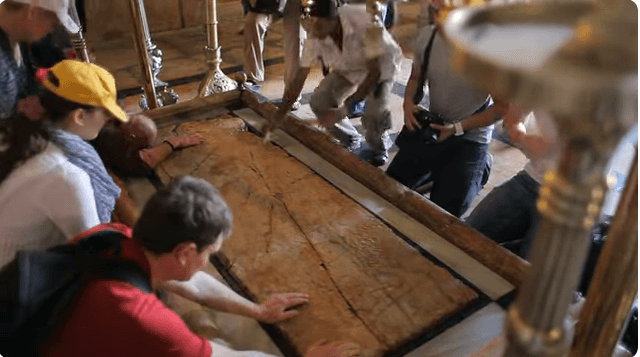
Your journey inside begins the moment you cross the threshold into the dimly lit nave. Right in front of you lies the Stone of Anointing (or Stone of Unction), a large marble slab marking where tradition says Jesus’ body was prepared for burial.
Pilgrims kneel here, some pressing foreheads to the cool, polished surface, others gently laying flowers or lighting candles. The stone gleams from centuries of touch — smooth in places, worn by millions of hands seeking connection.
As you stand there, run your fingers across its surface. Feel the subtle grooves where countless believers have traced their prayers. The energy here is intimate and tender, like a collective embrace for every grief or gratitude you carry.
Many visitors report a sudden wave of peace, as if the stone absorbs sorrow and returns quiet strength.
Golgotha: The Place of Crucifixion
Just a few steps away, a narrow staircase on the right leads up to Golgotha — Calvary itself. This is the most emotionally charged spot in the entire church.
Two ornate chapels mark the place of the crucifixion:
- The Catholic altar on the left
- The Greek Orthodox altar on the right
The air grows even thicker with reverence as you climb the worn wooden steps.
At the Greek Orthodox altar, visitors can kneel beneath the altar and reach through a small opening to touch the rock where the cross once stood. The stone feels surprisingly warm, almost alive, veined with silver.
People linger here for long minutes — some weeping openly, others whispering prayers with eyes closed. The emotional intensity of the space is impossible to ignore.
It is a raw and powerful reminder that pain and hope have always coexisted in the same sacred space.
The Rotunda and the Aedicule
Descending back down, you enter the grand Rotunda, crowned by a magnificent dome that floods the space with soft, filtered light.
At its center stands the Aedicule — the small, ornate shrine housing what is believed to be the tomb of Christ.
The line to enter can stretch for hours during peak times, but the wait itself becomes part of the pilgrimage. Pilgrims from India, Nigeria, Brazil, and Korea stand together, lighting candles that flicker like tiny stars against the ancient walls.
When your turn finally comes, you duck through the low doorway into two tiny chambers:
- The outer chamber holding the Angel’s Stone
- The inner chamber containing the marble slab covering the burial place itself
The confined space creates a feeling of closeness — to the stone, to your own breath, and to the divine.
Many describe an overwhelming sense of resurrection hope here, a lightening of the spirit that feels deeply transformative.
Hidden Chapels and Quiet Corners
The church reveals even more if you wander its quieter corners.
Chapel of St. Helena
Venture downstairs into the Chapel of St. Helena, where the air cools and the stone feels older still.
Chapel of the Finding of the Cross
According to Christian tradition, this chapel marks the place where Helena, Constantine’s mother, discovered the True Cross.
Side Chapels and Sacred Details
Small chapels dedicated to different saints and denominations offer hidden alcoves for silent reflection.
Look up at:
- Soaring arches
- Intricate mosaics
- Hanging oil lamps burning for generations
- Faded frescoes rich with history
Every crack in the stone tells a story of faith that refused to die.
The low ceilings and narrow passages create an intimate atmosphere — crowded, yet never chaotic. People instinctively lower their voices. Phones stay tucked away more often than not.
This is where tourism transforms into pilgrimage.
Why the Church Feels Spiritually Powerful
What makes the Church of the Holy Sepulchre such a profound source of divine energy is how it gathers human emotion across two millennia.
Millions have entered carrying grief, guilt, joy, doubt, or wonder. Those emotions seem woven into the very walls.
You don’t need to be Christian — or even religious — to feel it. The place interrupts the noise of modern life and gently forces self-inquiry:
- Why do we suffer?
- Can hope outlast pain?
- Is there something eternal beyond what we can see?
In that stillness, many reconnect with their own inner light.
Practical Tips to Experience It Fully
Best Time to Visit
Visit early morning (around 5 a.m.) or late afternoon to avoid peak crowds and experience the church in quieter moments.
Dress Respectfully
Wear modest clothing Shoulders covered Knees covered
This shows respect for the sacred environment and all faiths present.
Guided Tours
Entry is free, but guided tours can deepen the experience. Many local operators offer spiritually focused walks that provide historical and emotional context without rushing.
Bring a Journal
The reflections that arise here are worth capturing.
Photography Etiquette
Photography is allowed in most areas, but remain respectful and silent while taking photos.
Combine With the Via Dolorosa
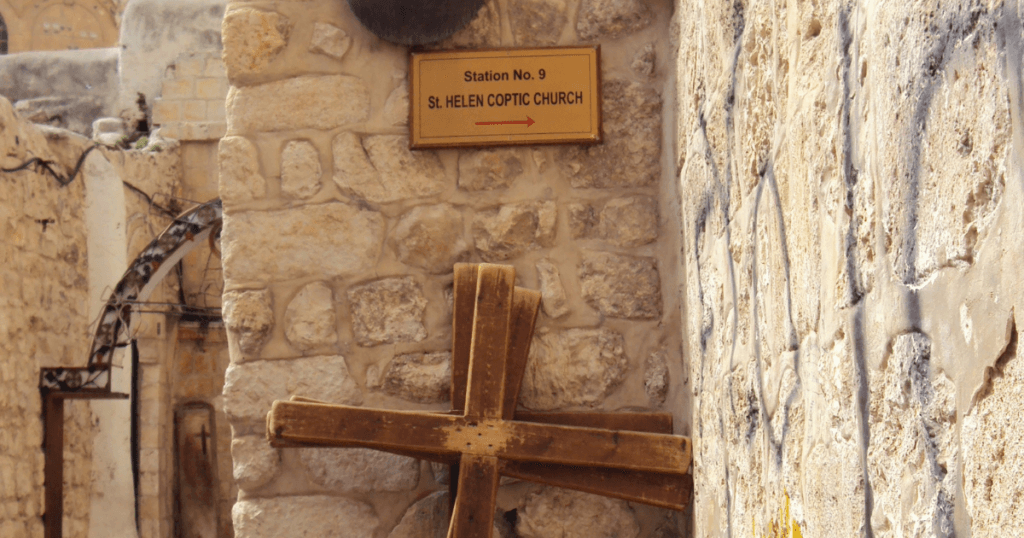
Enhance your visit by walking the Via Dolorosa — the traditional path Jesus walked to Calvary — beginning at Lions’ Gate for a full-day spiritual experience.
Extend Your Spiritual Journey in Jerusalem
Jerusalem’s Old City is filled with other sacred places that radiate spiritual energy. Discover Jerusalem’s sacred sites. Explore the Via Dolorosa
Via Dolorosa
Walk the 14 Stations of the Cross and experience history step by step.
Mount of Olives
Visit the Mount of Olives for breathtaking panoramic views of Jerusalem.
Garden of Gethsemane
Explore the Garden of Gethsemane, where ancient olive trees still stand as silent witnesses to history.
Western Wall
The Western Wall carries its own powerful atmosphere of prayer and devotion.
Dome of the Rock
The Dome of the Rock reflects centuries of interfaith reverence and spiritual significance.
Together, these places create a tapestry of faith and reflection that no single visit can fully contain.
A Quiet Transformation
When I finally stepped back into the sunlight of the courtyard, I carried no dramatic visions — only a deep, quiet stillness.
A knowing that some places hold more than history; they hold the accumulated prayers, tears, and hopes of generations. That energy travels home with you, softening daily stresses and reminding you of life’s bigger questions.
If you ever find yourself in Jerusalem, give this place time. Not just a quick visit, but enough silence to truly experience it.
The Church of the Holy Sepulchre awaits not simply as a destination, but as a companion on your soul’s journey.
Some places don’t just exist. They awaken you. And once you’ve stood where divine energy has gathered for centuries, a part of it stays with you forever.