Why does life feel so heavy, even when you’re trying your best every day? If you’re silently fighting mental pressure, this is for you.
why life feels so heavy
May is Mental Health Awareness Month. This is my voice. This is my truth. And if you’re reading this, maybe it’s yours too.
It is 2 a.m. and I am wide awake again. Not because of a nightmare. Not because of noise outside. I am awake because my mind will not let me rest. The thoughts are loud, circular, relentless — a conveyor belt of worries, regrets, and fears that keeps moving no matter how many times I beg it to stop.
This is what living with mental pressure feels like from the inside. Not the cleaned-up, Instagram-quote version. The real one.
I want to talk about it today — not as a doctor, not as a therapist, not as someone who has figured it all out — but as someone who is still in the middle of the fight. Still breathing. Still showing up. Still choosing, every single day, to try again.
Why Life Feels So Heavy (Even When You’re Trying)
There are days when you do everything right. You wake up. You push through. You show up. You try. And still — the weight is there. Still pressing down on your chest like something you cannot name and cannot shake.
People around you might say, “But you have so much to be grateful for.” And maybe they are right. But gratitude does not always lift the heaviness. And the heaviness does not mean you are ungrateful or weak or broken. It means you are carrying something real.
Why life feels so heavy is not always one single reason. It is the accumulation — the sleepless nights stacked on top of unspoken pain, stacked on top of a toxic environment, stacked on top of fighting battles nobody else can see. It adds up. And at some point, the weight becomes its own kind of gravity, pulling at everything you do.
If you have been asking yourself why you feel this way even when you are trying so hard — this is your answer: you are not failing. You are carrying too much, for too long, often completely alone.
The Fight Nobody Sees
There is a war happening inside me. And the hardest part? From the outside, you would never know.
I go to work. I reply to messages. I laugh at the right moments. I nod when people talk. But underneath all of that, a 24/7 battle is running in my mind. It never fully stops. Even in quiet moments — especially in quiet moments — the noise gets louder.
This is what constant mental pressure does to a person. It does not announce itself loudly. It seeps in slowly. It shows up as exhaustion that sleep cannot fix. As irritability with people you love. As a strange numbness where joy used to live. As that feeling of going through the motions while feeling completely disconnected from your own life.
If this sounds familiar, I want you to know something important: you are not weak. You are carrying something heavy, and you have been carrying it for a long time.
The world does not always see this fight. Your workplace does not. Your social media feed does not. Sometimes even the people closest to you do not. But it is real. It is valid. And the fact that you are still showing up every day — even imperfectly — is one of the bravest things a human being can do.
How Toxic Environments Drain You
Let me be honest about something that does not get said enough: where you live, who you live with, and what surrounds you every day — it matters. It matters enormously.
When the environment is toxic — when there is constant criticism, emotional coldness, conflict, bitterness in the air, or people who drain instead of support — it chips away at you. Not all at once. Slowly. Like water wearing down stone.
You start to doubt yourself. You start to shrink. You start to wonder if the exhaustion is your fault, if the sadness is a character flaw, if you are simply not strong enough.
You are not broken. You are responding normally to an abnormal situation.
A plant does not thrive in polluted soil no matter how strong its roots are. Human beings are no different. We need nourishment — emotionally, relationally, spiritually. When that nourishment is absent, or worse, when what surrounds us is actively harmful, survival itself becomes the goal. And survival is hard, exhausting work.
This is one of the biggest hidden reasons why life feels so heavy for so many people. Not because they are not strong enough — but because they are growing in the wrong soil, and nobody is talking about it honestly enough.
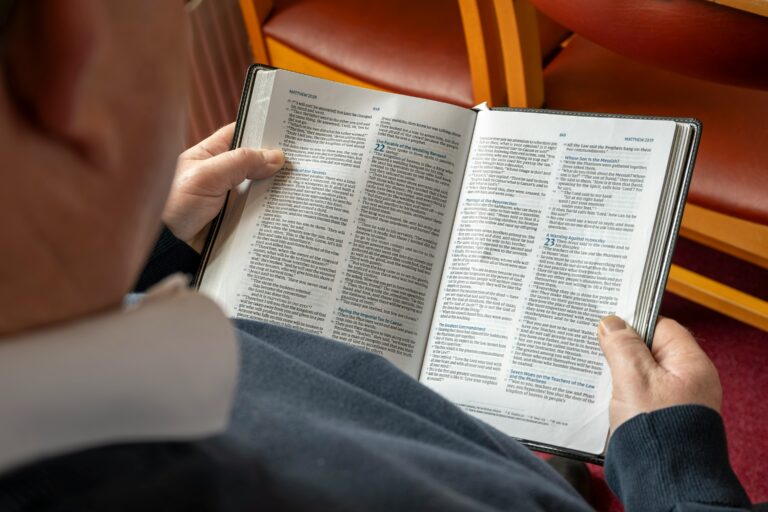
Biblical Strength in Mental Pressure
On my hardest days, I come back to this verse:
“I can do all things through Christ who strengthens me.”
— Philippians 4:13
Not because it magically removes the pain. Not because it makes the difficult environment disappear. But because it reminds me that I am not doing this alone. That there is a source of strength available to me that is bigger than my own willpower. That even when I feel like I have nothing left, I can borrow strength from something greater than myself.
Mental pressure has a way of making you feel isolated — like you are the only one who has ever felt this lost, this tired, this overwhelmed. Faith, for me, breaks that isolation. It says: you are seen. You are held. You do not have to do this on your own.
Whatever your belief system, find that anchor. Find the thing that reminds you that you are not alone in this fight, and that the weight you carry does not have to crush you.
Practical Ways to Survive Mental Pressure
I am not going to give you a polished list of wellness tips. What I will share is what has genuinely helped me keep going on the days when keeping going felt impossible.
- Talk to someone — even just one person.
The silence of mental suffering is suffocating. You do not need to explain everything. You do not need someone to fix it. You just need to say out loud: “I am not okay right now.” One honest conversation can lift a weight you did not know you were carrying alone. - Keep your routine, even when you do not want to.
When everything feels chaotic internally, small external anchors matter. Wake up at the same time. Drink water. Step outside for five minutes. These are not cures. They are survival tools — small acts of care that say to your body: we are still here, we are still trying. - Protect your energy fiercely.
In a toxic environment, you will be pulled in a hundred directions. People will take if you allow them to take endlessly. You are allowed — you are entitled — to say no. To limit conversations that drain you. To create small pockets of quiet where you can breathe. - Document small wins.
When you are in survival mode, progress feels invisible. Write down one thing at the end of each day that you did, even if it was just getting out of bed. Over time, this becomes evidence that you are moving, even when it feels like you are standing still. - Don’t change the goal — change the strategy.
Your goal still matters. Peace, stability, a better life — do not abandon it. When the current path is not working, ask: Is there another way? A different door? A smaller step you have not tried yet? Adapting is not giving up. It is wisdom. The strongest people are not the ones who never bend — they are the ones who know when to bend so they do not break. - Get professional support if you can.
There is no bravery in refusing help. Seeing a therapist or counselor is one of the most courageous things a person can do. It is not weakness — it is wisdom. If you are in crisis, please reach out to a mental health helpline in your country.
To Everyone Who Is Still Fighting
This Mental Health Awareness Month, I do not want to post a pretty graphic with a ribbon and call it awareness. I want to sit with you in the hard, honest truth of what it actually feels like to struggle.
It is exhausting. It is lonely. It is a fight that does not pause for weekends or holidays or the days when you desperately need a break from your own mind.
But you are still here. You are reading these words. That means something. That means everything.
The goal has not changed. You still deserve peace, stability, joy, a life that feels like yours. The strategy might need to shift. The timeline might look different than you imagined. But you — the version of you that fights even when it is terrifying, that survives even when survival is the only option — that person is not failing.
That person is fighting. And fighting, even imperfectly, is enough.
Hold on. Work. Keep going. Change the strategy, not the goal.
And if nobody has told you today: I see you. I am with you. You are not alone in this.
If you or someone you know is struggling with mental health, please reach out to a licensed therapist or a mental health helpline in your region. You deserve support.
Did something in this article touch you?
I would love to hear your story. Book a free 20-minute discovery call — no strings attached, just a real conversation.